
Shri Parijnanashram Trayodashi
Shrī Parijñānāshram Trayodashī is a beautifully composed stotra of 13 shloka-s which offers salutations to H.H. Shrīmat Parijñānāshram Swāmījī III. Chanting of this divine stotra daily bestows upon us the Benevolence of our Guruparamparā.
This stotra unfolds before us the life of H.H. Shrīmat Parijñānāshram Swāmījī III, a life that was immersed in the Highest Knowledge and dedicated to our samāja. He not only led the samāja on the spiritual path, but also initiated numerous social welfare programmes.
At a very tender age, at which most children would be ‘playing bat and ball ’ and enjoying the warmth of their beloved parents’ indulgence, He undertook the rigorous life of a Sannyāsī, only to become the parent incarnate of our samāja instead. It is as inspiring as it is humbling and we bow down in limitless gratitude to our Divine Parama Guru to seek His Blessings.
In this series of 13 articles we will highlight this dedicated life, every minute of which was spent for the welfare and betterment of devotees.
Shloka I - Our Parama Guru Swāmījī as the Foremost Shis͟hya
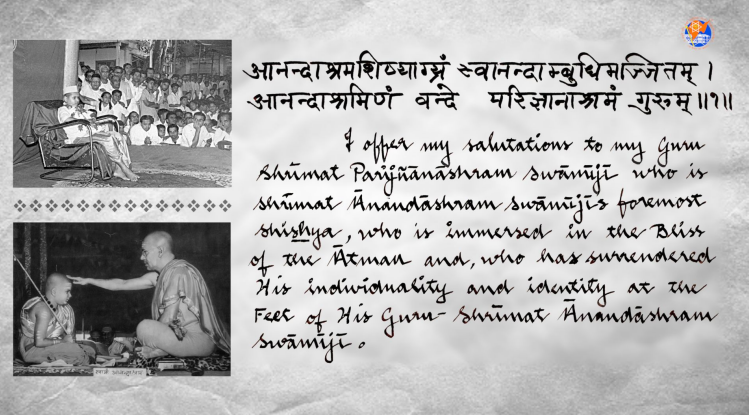
(The Guru renounces the world, attains Knowledge through intense tapashcharyā and religious practices, only to guide, protect and direct sādhaka-s towards righteous deeds and Sadgati, with Nis͟hkāma bhāva. The Guru-s in our sacred Guruparamparā have been the epitomes of this tradition for over three centuries.)
Our Shrī Chitrāpur Guruparamparā began with the Pīt͟hārohaṇa by Ādi Guru H.H. Shrīmat Parijñānāshram Swāmījī I in 1708. Heeding the pleas of devotees, in 1720, He ordained the only son of Shrī Kṛs͟hṇayyā Kulkarṇī from the Harīṭekār family, which was honoured with the epithet ‘Shukla Bhaṭ’. The Shis͟hya Swāmī was named ‘Shaṅkarāshram’ . Since then, the Guru-s of our Guruparamparā have guided and protected the samāja through various trials and travails.
About 200 years later, H.H. Shrīmad Ānandāshram Swāmījī was entreated to select a Shis͟hya, by the senior members of our laity. Apart from the astrological aspects, based on the guṇa-s observed by H.H. Swāmījī, He chose little Ravīndra Shukla to be His Foremost Shis͟hya. Thus, the first shloka of Shrī Parijñānāshram Trayodashī begins with आनन्दाश्रमशिष्याग्र्यम्
In His Pūrvāshrama, our Parama Guru Swāmījī was Kumār Ravīndra, born to Shrī Shaṅkarnārāyaṇa Laxmaṇa Shukla Bhaṭ and Smt. Shāntābāī in Shirālī on 15th June 1947 (Sarvajit Nāma Saṁvatsara, Jyes͟ht͟ha Māsa, Kṛs͟hṇa Paks͟ha Ekādashī, Shubha Ravivāra). At the age of six, their family moved to Mumbaī and Kumār Ravīndra joined Poddār High School, Sāntācrūz. Though He had studied in a Kannaḍa-medium school upto class II, He quickly adjusted to the new environment, excelling in academics and sports. Cricket and cycling were His favourites, as was music.
He played the hārmonium, tablā and flute proficiently. He was also popular with the other children. His thread ceremony was performed on 16th May 1956 at the age of 8 years, at Shirālī. H.H. Shrīmad Ānandāshram Swāmījī, who was camping at Mallāpur, came to Shirālī on this occasion and gave prasāda with His Divine Hands to Baṭu Ravīndra.
Kumār Ravīndra gave up this idyllic life to accept Sannyāsa at the age of about 12 years. When He was in class VI, He was selected for Shis͟hya Swīkāra. This news was conveyed to Him on Gokulās͟hṭamī day in 1958. He accepted this decision with equanimity, a striking quality in a child so young.
His predisposition towards a religious life was evident in His profound nature, in His scholarship of stotra-s and dhārmika texts, attending pūjā-s and ceremonies at the Mat͟h. He always attended the Dīpanamaskāra, pūjā-s and other religious observances at the Mat͟h and was fond of bhajana-s and kīrtana-s. It was apparent to all present that the little child was fully prepared for the transformation which would one day lead to the responsibility of leading the samāja forward as its Mat͟hādhipati.
The prelude to the main ceremony vouchsafing the continuation of our Guruparamparā commenced on 27th February 1959 with preliminary ceremonies, culminating in the Shis͟hya Swīkāra on 1st March 1959 (Māgha Shukla Saptamī ). This was the same tithi as the Guru Prāpti Diwasa, when our samāja was blessed with the advent of our Ādi Guru H.H. Shrīmat Parijñānāshram Swāmījī I in 1708.
The magnificent Shis͟hya Swīkāra event was held at Shivājī Park, Dādar, Mumbaī and was witnessed by more than 10,000 sādhaka-s. Such a huge event could be organised only because of the diligent hard work of over 400 volunteers. Purification ceremonies like the Laks͟͟ha Gāyatrī Anus͟ht͟hāna, Laghu Rudra and Kṛchc͟hra Prāyashchitta (atonement for unintentional transgressions) were performed by Kumār Ravīndra, who was soon to be ordained as Shis͟hya Swāmī.
In a poignant leave-taking ceremony, His mother blessed Him with the pañchāratī. He then bid farewell to His family and graciously proceeded to adopt our Chitrāpur Sāraswata samāja as His extended family.
An eloquent prayer was offered invoking the Blessings of Bhagawān Bhavānīshaṅkar and the Guruparamparā for the Shis͟hya designate. As͟hṭashrāddha (offerings to Deva-s, ṛs͟hi-s and ancestors to obtain their grace and liberation from one's debt to them), Vapana (tonsorial ceremony), Sannyāsa Grahaṇa Saṅkalpa (sacred vow of renunciation), Swasti Vāchana (praying for maṅgalatā), Brahma yajña (recitation from the four Veda-s and scriptures), pūjā-s to the Is͟hṭa Devatā, Kula Devatā and other ceremonies took place.
Kumār Ravīndra performed Saktu Prāshana (accepting ‘javā’- barley grains - used since ancient times in pūjā and rituals). Saktu Prāshana signifies the determination of the Sannyāsin to be content with whatever bhiks͟hā is received to maintain His physical body. Ᾱgneya Sthālīpāka (invoking and propitiating the sacred Fire for yajña, homa etc.), various elaborate rituals like Homa-s, As͟hṭashrāddha, Nis͟hkramaṇa and Bandhuvisarjana (cutting ties with worldliness, friends and relatives) led up to Āshīrvāda for the Shis͟hya - the transformation of young Ravīndra an ochre-clad Sannyāsī, pledged to a life of renunciation for the realisation of the Ātman and to guide our samāja in the days to come.
Amidst Mantra-ghos͟ha, young Ravīndra arrived at the Vedikā and paid obeisance in Garuḍa mudrā to His Guru seated there. At Mīna Muhūrta, the Shis͟hya was Blessed with the sacred Upadesha. Pouring tīrtha on His head, His Guru bestowed upon Him the name ‘Parijñānāshram’. He was thus formally ordained as the Shis͟hya Swāmī. This was followed by Shrī Guru Pādukā Pūjana of H.H. Shrīmad Ānandāshram Swāmījī by Shis͟hya Swāmījī. The congregation was Blessed with H.H. Shrīmad Ānandāshram Swāmījī’s Āshīrvachana-s, Mahāpūjā-s, prasāda vitaraṇa and various other events, over the three day celebration (between 27th February and 1st March 1959).
The then President, Standing Committee of the Mahāsabhā, Shrī K. Guru Dutt, reiterated that the earliest documents, dated about 1720, named the first Guru as ‘Parijñānānanda āshram’, which indicated the eternal connection between ‘Parijñāna’ and ‘Ānanda’. During pālakī utsava, H.H. Shrīmat Parijñānāshram Shis͟hya Swāmījī was seated in a pālakī and was ceremoniously taken in a procession around Tālmakīwāḍī.
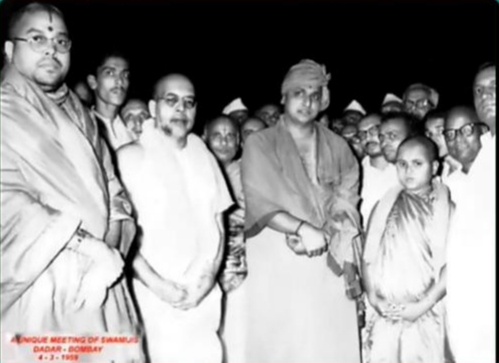
There was a unique gathering, when the Mat͟hādhipati-s of the Gouḍ Sāraswata community, H.H. Shrīmad Dwārakānāth Tīrtha Swāmījī of Gokarṇa Partagāl̃ī Mat͟h and H.H. Shrīmat Sudhīndra Tīrtha Swāmījī of Kāshī Mat͟h met H.H. Shrīmad Ānandāshram Swāmījī with Shis͟hya Swāmījī. A momentous occasion indeed!
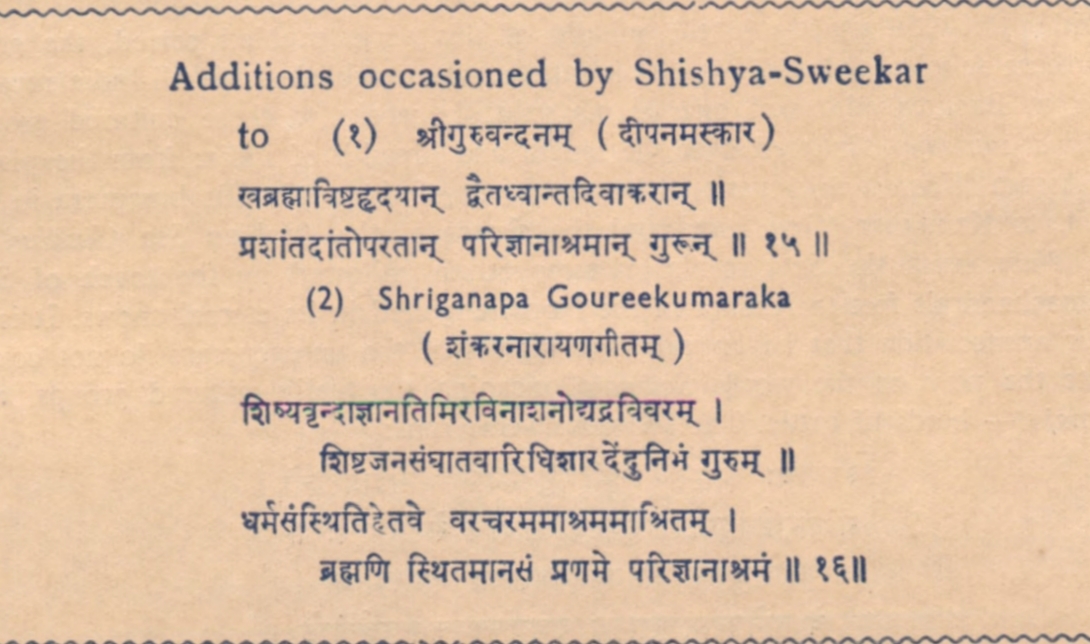


Additions occasioned by Shis͟hya Swīkar
१. श्रीगुरुवन्दनम् (दीपनमस्कार) –
खब्रह्माविष्टहृदयान् द्वैतध्वान्तदिवाकरान्।
प्रशान्तदान्तोपरतान् परिज्ञानाश्रमान् गुरून्॥ १५॥
२. श्रीगणपगौरीकुमारक...(श्रीशङ्करनारायणगीतम्) –
शिष्यवृन्दाज्ञानतिमिरविनाशनोद्यद्रविवरम्।
शिष्टजनसङ्घातवारिधिशारदेन्दुनिभं गुरुं॥
धर्मसंस्थितिहेतवे वरचरममाश्रममाश्रितम्।
ब्रह्मणि स्थितमानसं प्रणमे परिज्ञानाश्रमम्॥ १६॥ )
(The last two lines were modified and are now recited as follows
धर्मरक्षणसिद्धये वरचरममाश्रममाश्रितम्।
ब्रह्मसंस्थितमानसं प्रणुमः परिज्ञानाश्रमम्।।)
Shis͟hya Swāmījī observed His first Chāturmāsa at Bangalore (Beṅgal̃ūru). His inspiring tutelage under His Guru lasted for about six years. In His treatise ‘Antaraṅga’, HH Swāmījī had written soulfully about His experiences with His Guru Swāmījī. It is a font of Knowledge, which leaves the reader misty-eyed.
\
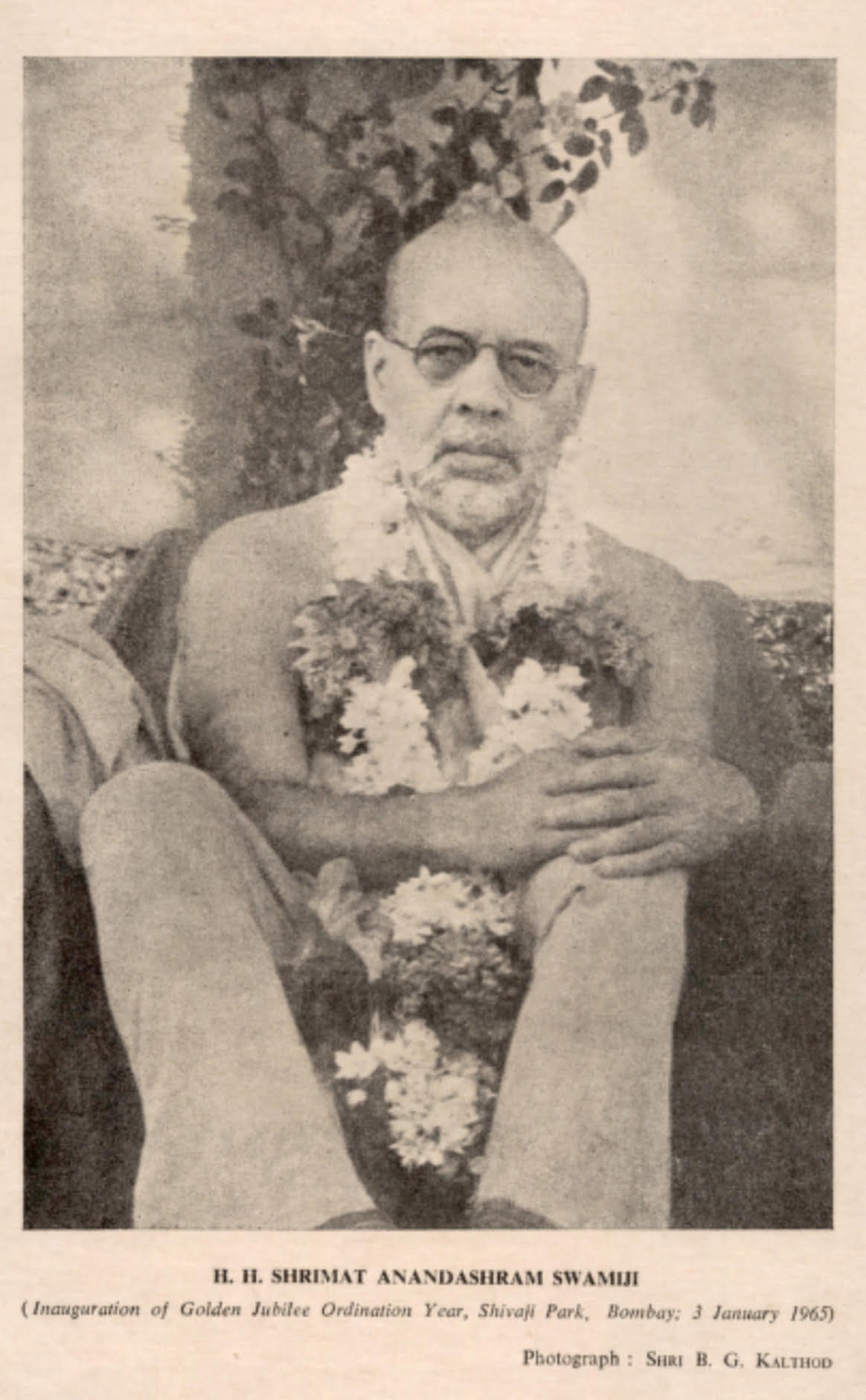
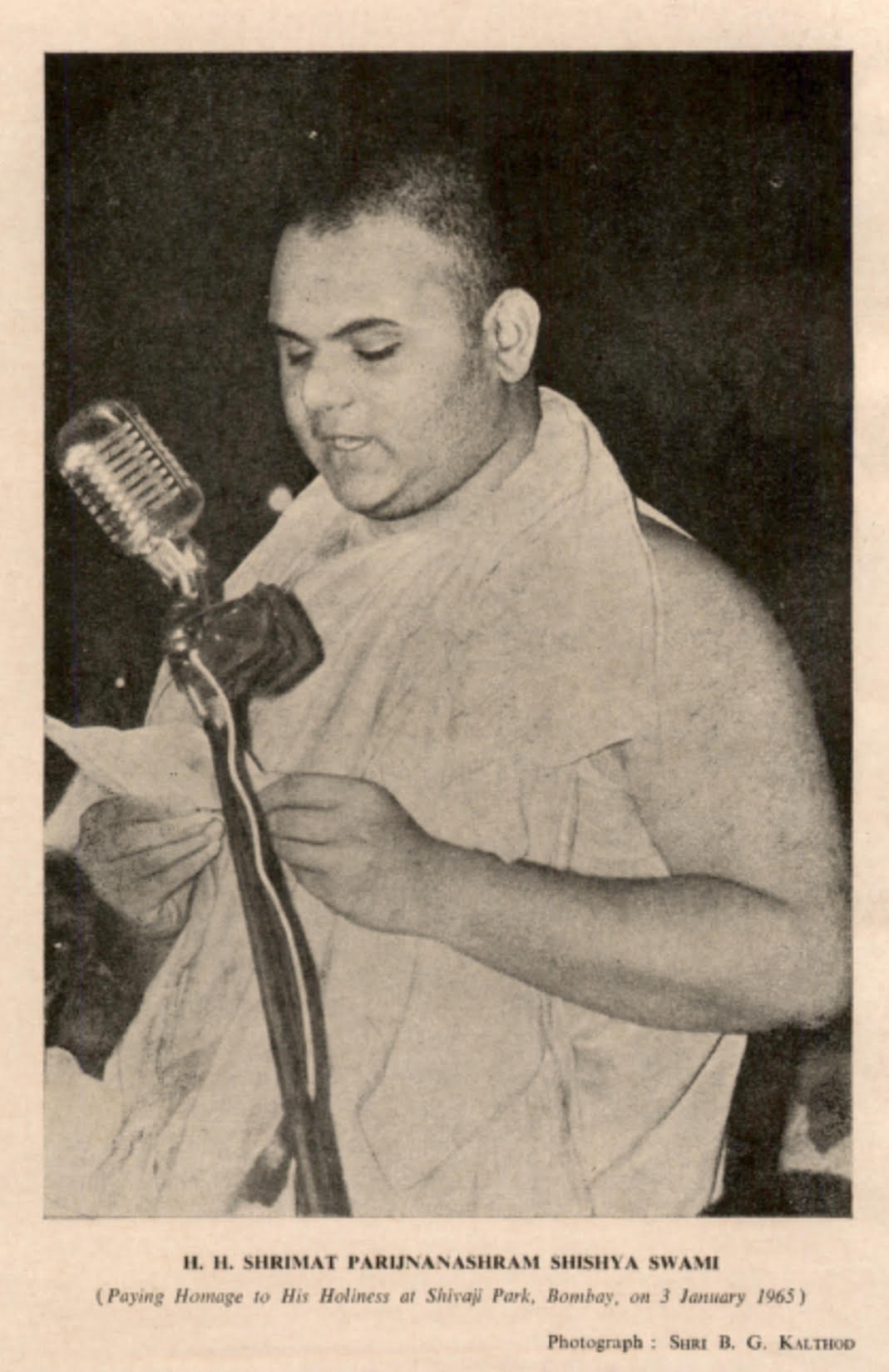
The Golden Jubilee of H.H. Shrīmad Ānandāshram Swāmījī’s Ordination Day of Mat͟hādhipatya was celebrated in January 1965 at Bombay (Mumbaī), May 1965 at the Shirālī Mat͟h and December 1965 at the Bangalore (Beṅgal̃ūru ) Mat͟h. H.H. Shrīmat Parijñānāshram Shis͟hya Swāmījī delivered His first public speech on this occasion in Bombay (Mumbaī) on 3rd January 1965.
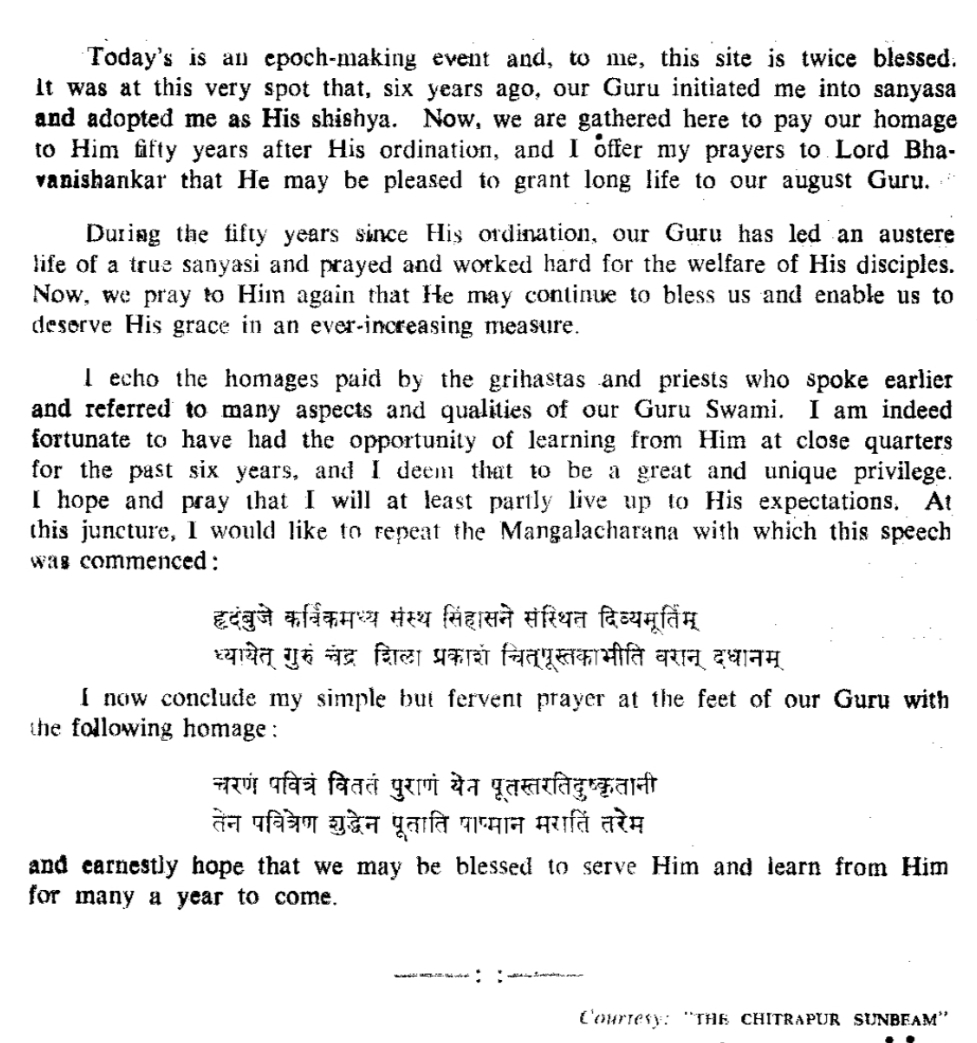
On 16th September 1966 at 9.15 p.m., H.H. Shrīmad Ānandāshram Swāmījī attained Mahāsamādhi. In a small Paṭṭābhis͟heka ceremony held on 12th October 1967 on Vijayā Dashamī at Shirālī, Shis͟hya Swāmījī was ordained as the tenth Mat͟hādhipati. H.H. Shrīmad Ānandāshram Swāmījī’s Blessings on Shis͟hya Swīkāra Diwasa have proved prophetic –
.jpg)
H.H. Shrīmat Parijñānāshram Swāmījī continues to Bless and Guide us in spirit and lives on forever in our hearts.
Samarpaṇam
Shrī Gurucharaṇāravindārpaṇam Astu
Written by Smt. Chandrimā Kalbāg, sourced from the Sunbeam archives, with research assistance from Chitrapurgpt and inputs from Shrī Chaitanya Gulvāḍy, Shrī Kris͟hṇānand Maṅkīkar, Smt. Shailajā Gāṅguly
***************************************
13 Sept 2026