
Adhika Masa - The Thirteenth Month: A Sacred Opportunity for Spiritual Elevation
Authored by – Smt. Chandrimā Kalbāg, with inputs from Shrī Nāgesh Hal̃dīpur Bhaṭ, Shrī Kris͟hṇānand Maṅkīkar, research inputs by Chitrāpur AI assistant from Shrī Chitrāpur Sunbeam
Adhika Māsa is considered to be the holiest month in the year according to the pañchāṅga (The Indian – Hindū calendar). Pañchāṅga or the five major limbs of the calendar are: Tithi (Lunar day) Karaṇa (Half-day), Naks͟hatra, Yoga (Angles of Sun and Moon), Divasa or Vāsara (solar day)
The pañchāṅga has been used in India since Vedic times, though certain regional differences have crept in over the centuries. In the modern era, the Gregorian calendar is used for daily life, but the Hindū calendar is still used to select dates and auspicious times for religious observances and festivals.
The wise ṛs͟hi-s of ancient India were aware that the entire universe is in constant motion, but for practical purposes, a geo-centric model was adopted for establishing a system of keeping time - the calendar or pañchāṅga. The skies were mapped in relation to the Earth, which was considered to be a static point of reference, while the position of the stars and other heavenly bodies in the changing constellations were attributed to their apparent movement.
The days were counted by the changing phases of the moon, months in relation to the changing seasons and a year by the stars in the night sky. A period between one Pūrṇimā (full moon) and one Amāvāsyā (new moon) was considered to be a lunar month, approximately 28 days. The solar month was considered to be the sun transiting from one Rāshi (Zodiac sign) to the next, on every Saṅkrānti. Both the solar and lunar calendars consist of 12 months.
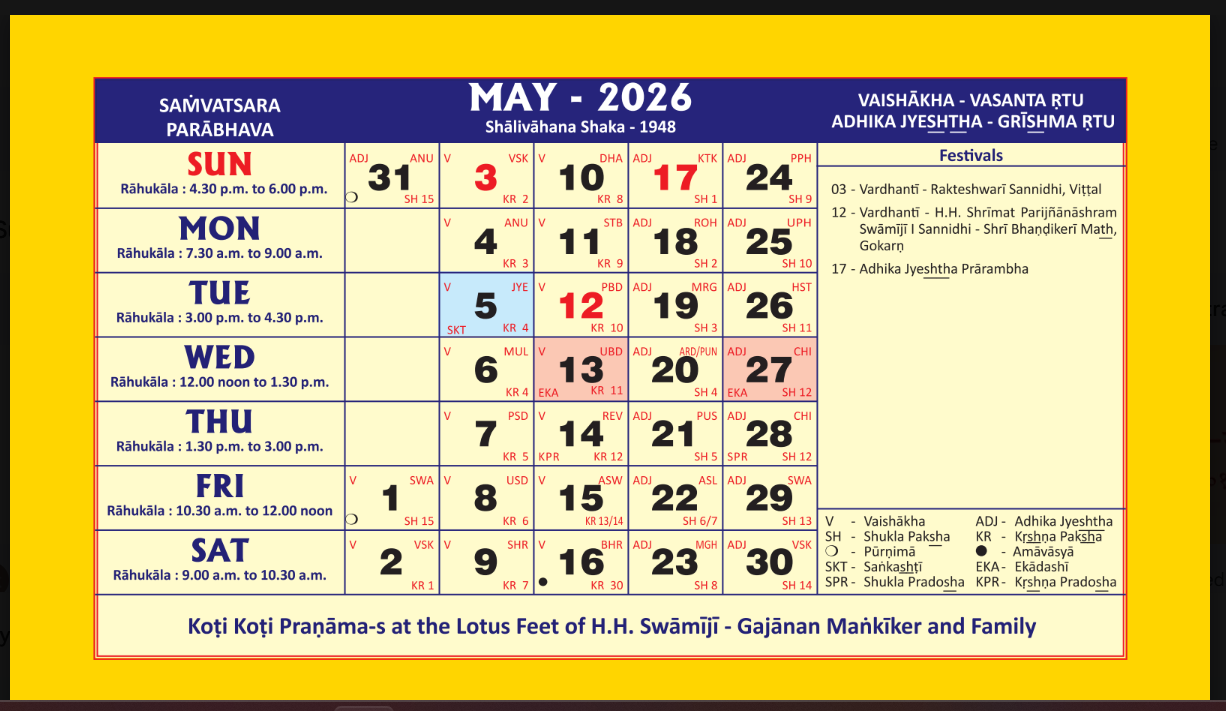
Our learned sages soon realised that there was a discrepancy of approximately 10 days between the solar and lunar years. The solar year has 365 ¼ days while the lunar year has about 354 days. The Gregorian calendar rectifies the difference by intercalation or adding extra days to certain months to make 365 days in a year. Even so, a quarter of a day remains unaccounted for, in the actual revolution of the Earth around the sun in one year. This quarter of a day adds up over four years to make one day, resulting in a leap year with 366 days. This extra day is added to February; hence, in a leap year, February has 29 instead of 28 days. Similarly, every third year of the Hindū calendar has an Adhika Māsa (intercalary month) to offset the difference arising between the solar and the lunar calendars, when a lunar month passes without any solar Saṅkrānti. If this was not done, Dīpāvalī might have occurred sometimes in January or in July.
The Story of Adhika Māsa Becoming Purus͟hottama Māsa
In ancient times, the extra month that occasionally arose in the lunar calendar had no presiding deity. All the other months were associated with a deity and enjoyed religious respect, but this additional month was considered inauspicious and was called Mala Māsa ("the neglected" or "impure month"). Because of this:
● No festivals were assigned to it.
● No deity claimed it.
● People avoided important ceremonies during it.
● It was rejected by all.
Deeply distressed, Mala Māsa went to various Gods seeking protection, but none accepted responsibility for it. Finally, it approached Bhagawān Vis͟hṇu and lamented:
"All the other months are honoured, but I am despised. I have no presiding deity, no dignity and no place among the sacred months."
Moved by its sorrow, Bhagawān Vis͟hṇu compassionately bestowed upon the month His own name:
"From today, I shall make you My own. You shall be known as Purus͟hottama Māsa, after Me. Among months, you shall become exceedingly sacred."
Bhagawān Vis͟hṇu further declared that:
● Pūjā, japa, dāna (Charity), upavāsa (Fasting) or vrata, and adhyayana (study) performed during this month would yield Adhika phala or especially great merit.
● Those who sincerely perform tapas͟hcharya (spiritual disciplines) tīrtha yātrā-s (pilgrimage and bathing in holy waters) during this month would obtain His Benign Grace.
● The month that was once shunned would become one of the most spiritually powerful periods of the year.
Thus, the metamorphosis of the formerly rejected Mala Māsa into Purus͟hottama Māsa, the holiest of all months, was possible, only with faith, dedication and Bhagawān Vis͟hṇu in its heart as the Adhis͟ht͟hāna Devatā (Presiding Deity).
Unlike some vrata-s (observances) that yield temporary benefits, observing Purus͟hottama Vrata during this entire month grants sadgati (spiritual progress as per eligibility and even liberation from the cycle of birth and death). Since it symbolizes the extra opportunity granted by divine grace for spiritual rejuvenation, with self-discipline, devotion and detachment, people usually avoid worldly pursuits and ceremonies like weddings, gṛha pravesha or starting new business ventures during Adhika Māsa.
Devotees perform special pūjās during this period to receive Adhika Phala, or enhanced spiritual merit. Auspicious vrata-s like Shrī Satyanārayaṇa Pūjā, Satya Gaṇapati Pūjā, Varada Shaṅkara Vrata, and sevā-s to our Shrī Bhavānīshaṅkar Deva and Shrīvallī Bhuvaneshwarī Devī Sannidhi with specific prayers for prosperity and happiness are offered at Shrī Chitrāpur Mat͟h by sādhaka-s.
Just as the unwanted Mala Māsa was transformed from the discarded month to the holiest one, through devotion, dedication and divine grace, sādhaka-s have been granted this extra month to increase their spiritual potential. When a sādhaka has Bhagawān in his heart and every action performed is offered as pūjā, with the Anugraha of God and Guru, transformation is inevitable.