
DHULABHETA AT SHRI CHITRAPUR MATH, SHIRALI
Written by Smt. Chandrimā Kalbāg, with inputs from Shrī Chaitanya Gulvāḍy and Shrī Kris͟hṇānand Maṅkīkar, illustration by Kum. Devyānī Paḍubidrī
‘Āmgelŏ Mat͟hu’ conjures up the vision of Shrī Chitrāpur Mat͟h at Shirālī. It fills our hearts with love and reverence for our Ārādhya Devatā-s (main deities worshipped in the Mat͟h), Shrī Bhavānīshaṅkar, Guruparamparā and the Sāraswata Samāja as a whole. The Mat͟h stands as a beacon of our Sampradāya which encompasses more than three centuries of our history, since 1708 CE.
Dhūl̃abheṭa is a unique tradition followed by the Sāraswata community in many of our temples and Mat͟h-s, including the temples of Kula Devatā-s in Goā and Shrī Chitrāpur Mat͟h. It is traditionally performed with Phalasamarpaṇa, offering a Pal̃eru (plate) with coconuts and some fruits, flowers and kāṇika (monetary offering), with a namaskāra at the Sannidhi while a vaidika chants appropriate stuti-mantra-s. Usually, one takes a bath to wash off all the dirt and dresses appropriately before going to the temple or Mat͟h, but Dhūl̃abheṭa refers to going straight away to greet the deity or Guru, in a travel weary form. This is an expression of the eagerness with which a sādhaka (devotee) rushes to be in the Sānnidhya of the deity or Guru, and indicates that They accept us with all our blemishes, external and internal.
Dhūl̃abheṭa at Shrī Chitrāpur Mat͟h, Shirālī is unique since the Mat͟h has shrines for our Ārādhya Devatā-s, Parivāra Devatā-s and Guru Sannidhi-s. Even before we enter the Mat͟h precincts, we pay homage to the Ashwattha tree under which H.H. Shrīmad Ānandāshram Swāmījī used to sit in the evenings and often rendered discourses.
The first glimpse of the Mat͟h is heart lifting. Upon entering the gates, on the right-hand side is a shrine dedicated to the Ks͟hetrapāla, the protector of the divine ks͟hetra. One must offer obeisance here before continuing into the Mat͟h premises. While walking across the Rājāṅgaṇa (Courtyard) the Shivagaṅgā Sarovara on the right, with Dwādashānta - the Guru Niwāsa reflected in it, directs us to silently reflect upon our Guru and Guruparamparā as we enter the Mat͟h building.
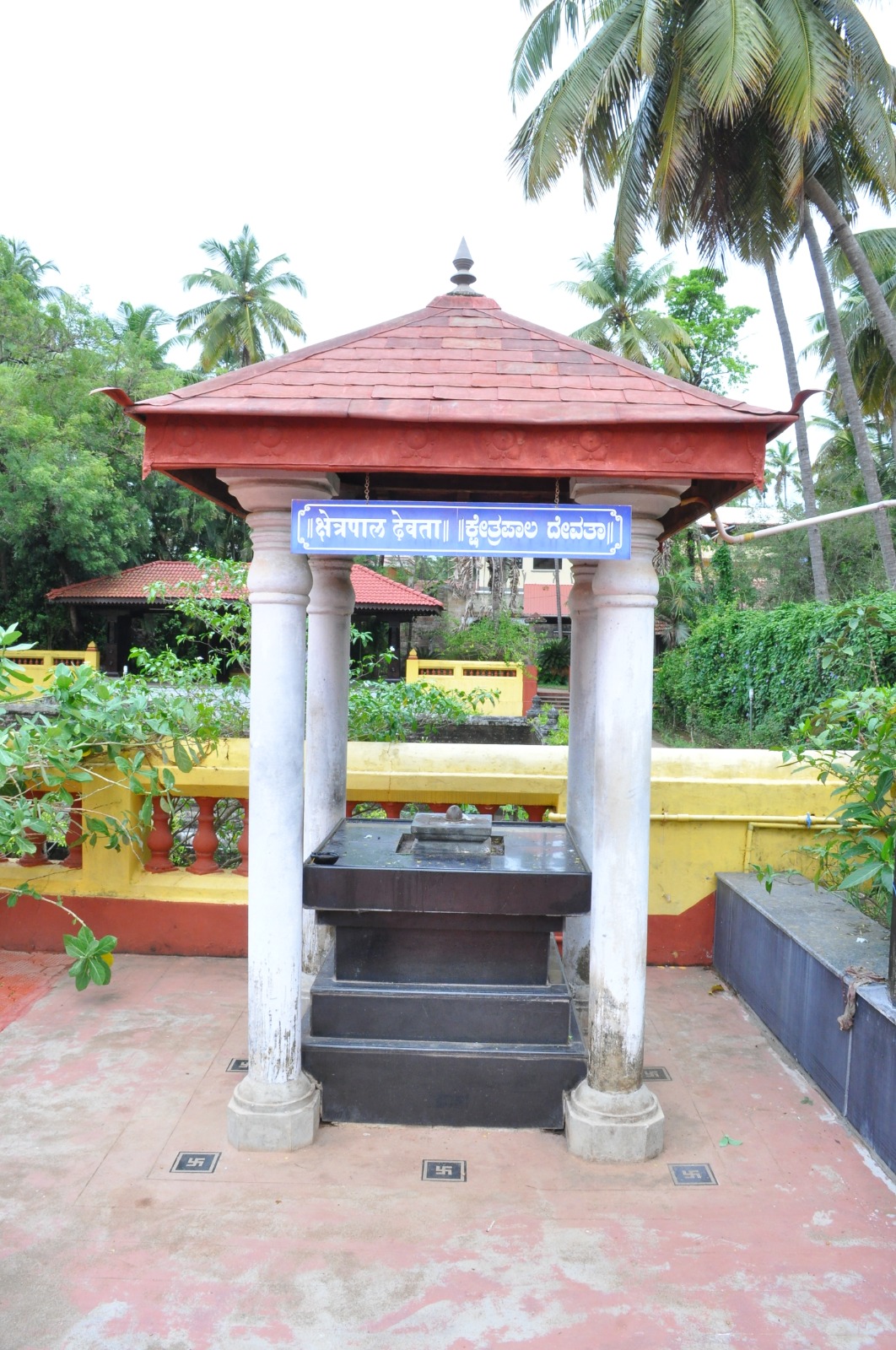 Ks͟hetrapāla
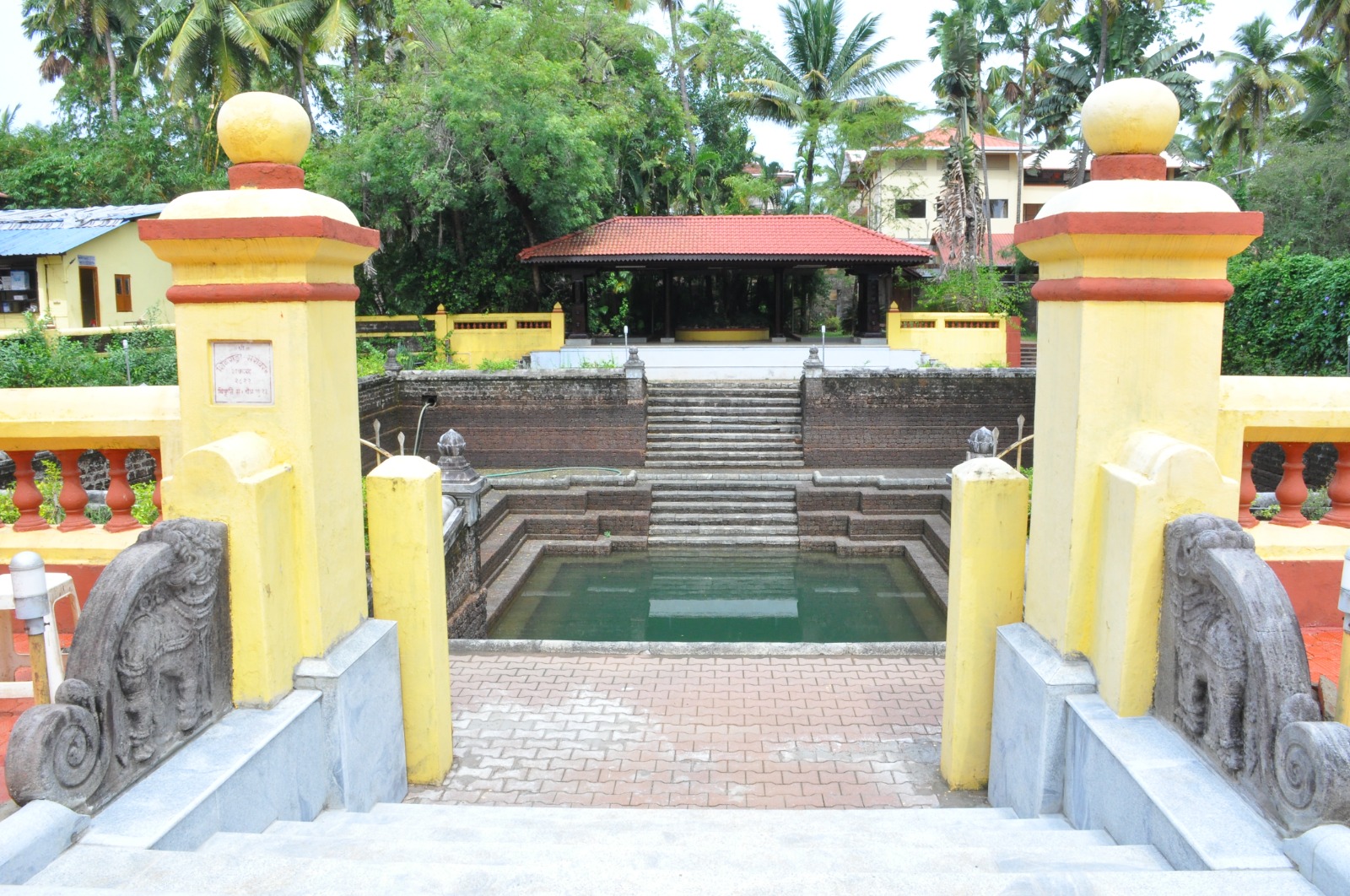 Dwādashānta - the Guru Niwāsa and the Shivagaṅgā Sarovara
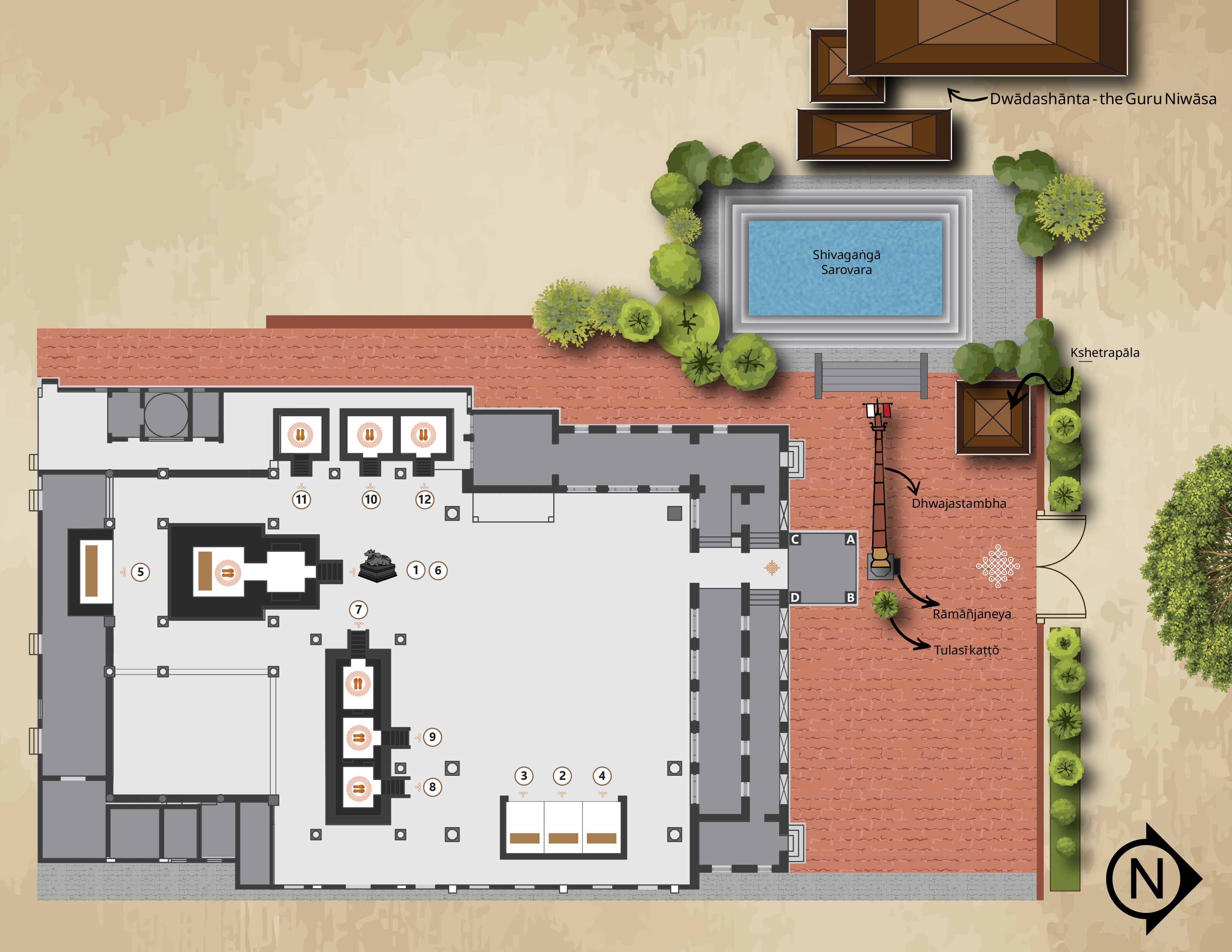 Illustration for Dhūl̃abheṭa sequence within Shrī Chitrāpur Mat͟h, Shirāli
The imposing Dhwajastambha, which is splendorous with decorations and the “Dhwaja” during the annual Rathotsava, has Rāmāñjaneya consecrated at its base, reminding us of the steadfastness of faith as we pay our respects here. Next, one offers namaskāra to the Tulasī at the Tulasī kaṭṭŏ next to the Dhwajastambha, which inspires us to offer unequivocal sevā.
As we enter the main Pravesha Dwāra of the Mat͟h, we pass the four newly erected stambha-s (pillars) of the portico with the Raudra Gaṇa-s of Shiva, guarding and protecting the sacred Vāstu of our Mat͟͟h. (Please refer to the illustration) We pay our respects first to Shrī Kālabhairava (A) and Shrī Vīrabhadra (B), associated with Shiva’s intense energy and power.
Then we pay our respects to the Dwārapāla-s of Shiva representing protection and benevolence, sculpted on the rear pillars - Shrī Parashupāṇi (C) and Shrī Shūlapāṇi (D).
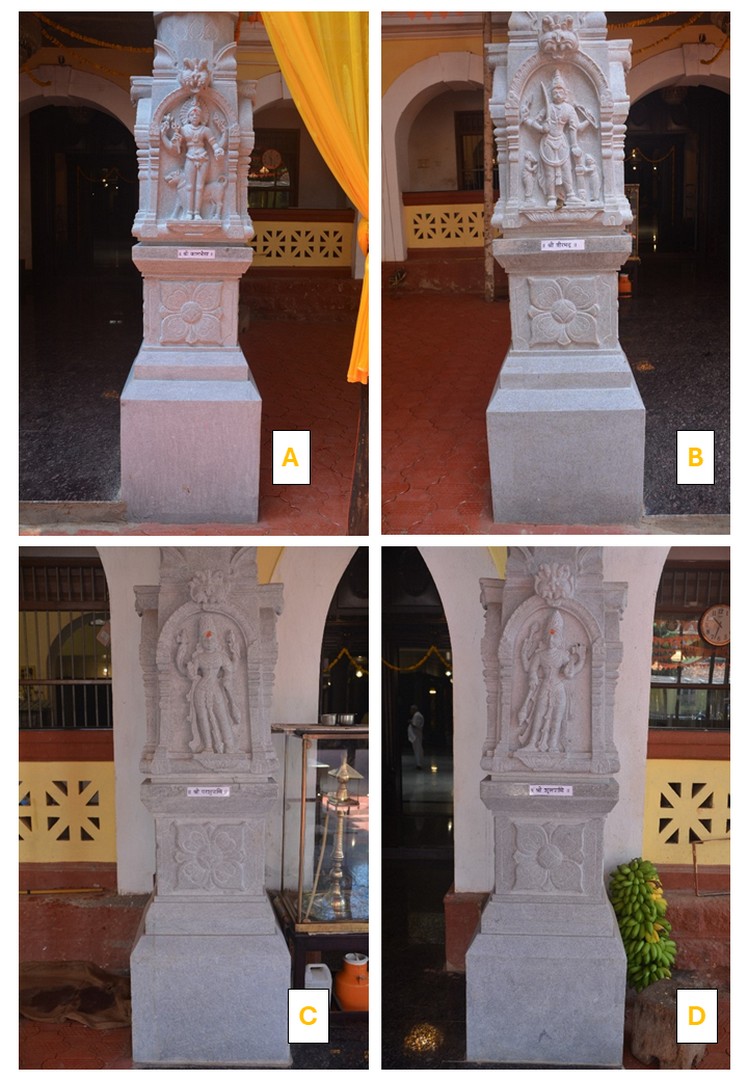
The intricately carved, massive wooden doors lead to the Pavitra environs of the Mat͟h building itself. We first offer our obeisance to the Kīrti Mukha and Shrī Gaṇapati sculpted on top of the Mukhya Dwāra (Main door) respectively praying for protection from all negativity and removal of all obstacles in our sādhanā.
As we enter, straight in the line of vision from the doorway, is the beautiful Nandī. (Please see the illustration for the numbered references) After paying respect to Him, one performs Dhūl̃abheṭa first at the Hoḍi Samādhi, Shrī Bhavānīshaṅkar Sannidhi (1), and thereafter, at the Sannidhi-s of Shrīvallī-Bhuvaneshwarī Devī (2), Shrī Mahāgaṇapati (3) and Shrī Ādi Shaṅkarācharya (4) in that sequence. This is a unique tradition at the Shrī Chitrāpur Mat͟h, Shirālī, since usually we offer obeisance to Shrī Gaṇesha first at most other temples. In His Āshīrvachana, H.H. Swāmījī has explained that this is because, after one pays obeisance to Shrī Bhavānīshaṅkar Deva at the Hoḍi Samādhi, since Shiva and Shaktī are always together, Dhūl̃abheṭa is performed at Devī Bhuvaneshwarī Sannidhi before Shrī Mahāgaṇapati in this instance.
[Please follow the link for the complete Āshīrvachana, https://youtu.be/bRrncXh9b1s?si=WyyhgvmnJaD5r6g ]
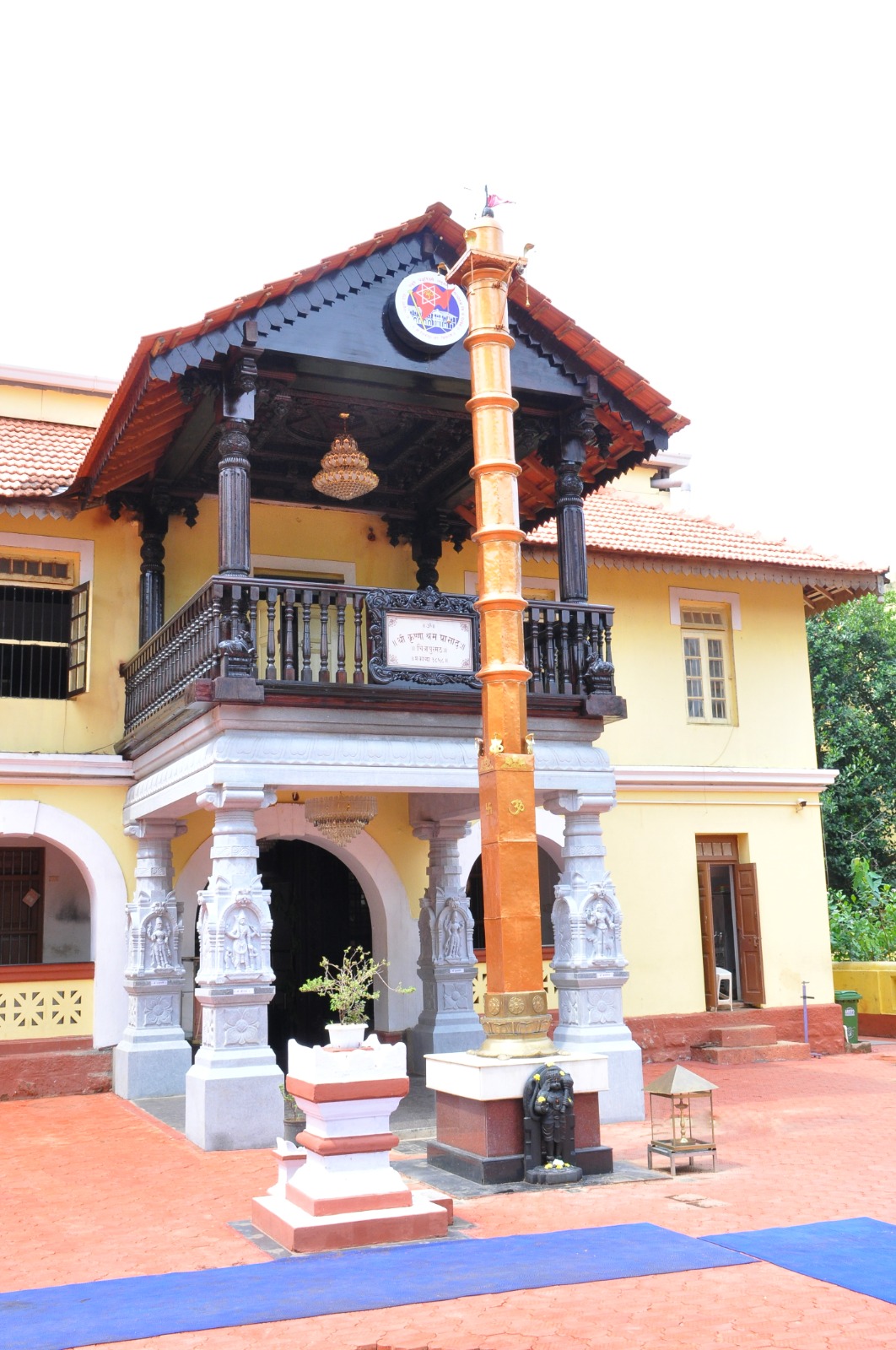 Dhwajastambha with Rāmāñjaneya consecrated
at its base, Tulasī kaṭṭŏ, Portico Pillars
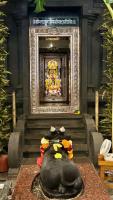 1, 6 - Hoḍi Samādhi
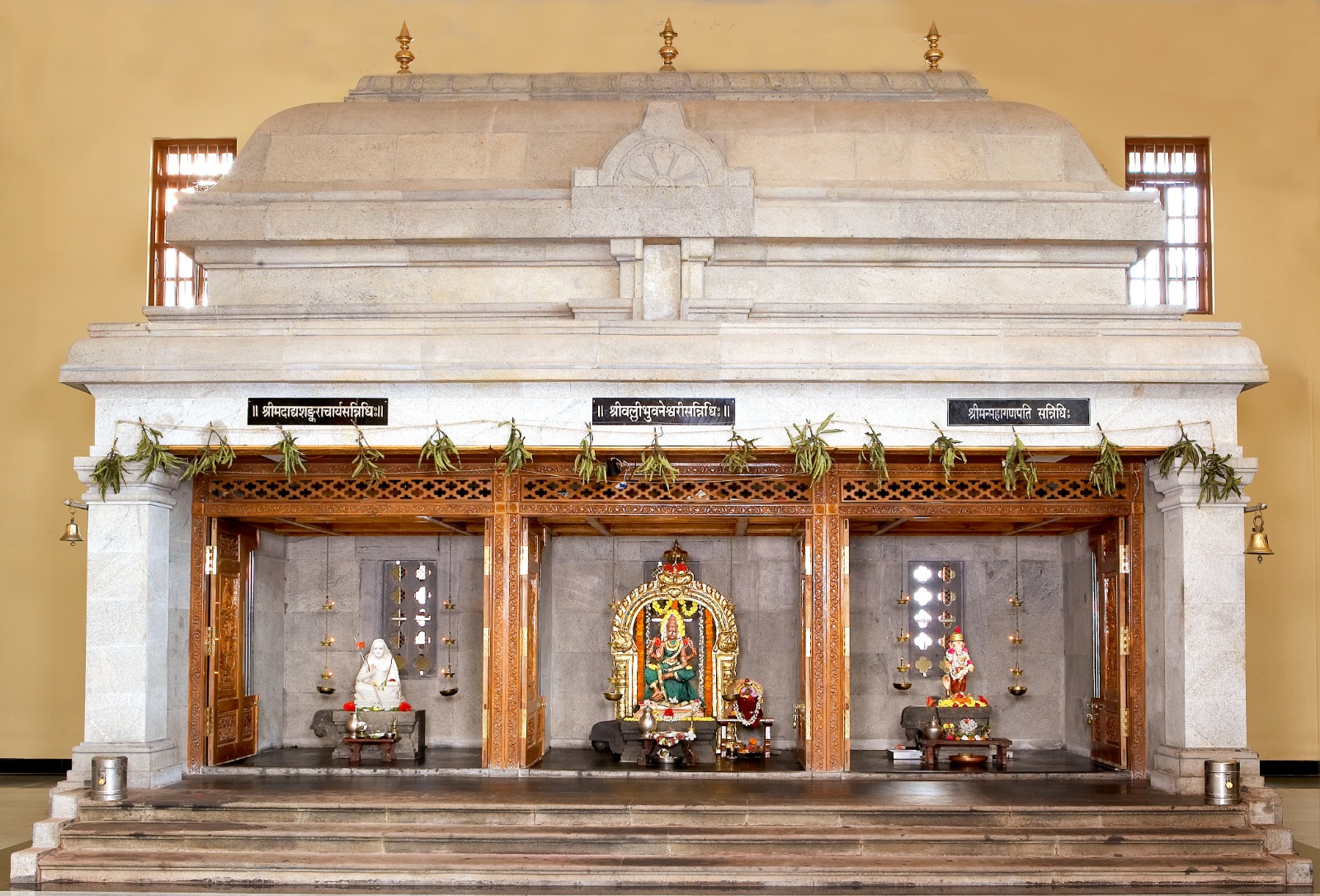 4. Shrī Ādi Shaṅkarācharya 2. Sannidhi of Shrīvallī-Bhuvaneshwarī Devī 3. Sannidhi of Shrī Mahāgaṇapati
Thereafter, taking care to offer pradaks͟hiṇā keeping the deities to our right, we go around the shrines, towards the Parivāra (family) Devatā-s (5). A special shrine has been constructed here and after paying respects, one can look up the roster to identify each Parivāra Devatā daily propitiated with Pūjana by our Mat͟h Purohita-s.
Completing the pradaks͟hiṇā, one comes back to the Hoḍi Samādhi, to perform Dhūl̃abheṭa at the Sannidhī of our Guru Swamī-s in the order in which They had ascended the Pīt͟ha. We pray to H.H. Shrīmat Parijñānāshram Swāmījī I - Bhaṇḍikerī Mat͟h, Gokarṇ, before offering namaskāra to H.H. Shrīmat Shaṅkarāshram Swāmījī I at the Hoḍi Samādhi (6), then on the left (7) at the Sannidhi of H.H. Shrīmat Parijñānāshram Swāmījī II. We pray to H.H. Shrīmat Shaṅkarāshram Swāmījī II - Mallāpur, and keeping one's right side towards the Samādhī-s, we proceed to offer obeisance beginning with the Sannidhi of H.H. Shrīmat Keshavāshram Swāmījī (8), then we pray to H.H. Shrīmad Vāmanāshram Swāmījī - Maṅgalore, next at the Sannidhi of H.H. Shrīmat Kṛs͟hṇāshram Swāmījī (9). We cross the Hoḍi Samādhi and offer namaskāra at the Sannidhi of H.H. Shrīmat Pāṇḍuraṅgāshram Swāmījī (10), Sannidhi of H.H. Shrīmad Ānandāshram Swāmījī (11) to the left and to H.H. Shrīmat Parijñānāshram Swāmījī III - Kārlā and Their Shrī Guru Pādukā-s (12) on the right. There is a Shrī-Yantra and Akhaṇḍa Jyoti too. The Akhaṇḍa Jyoti had been enkindled by H.H. Shrīmat Sadyojāt Shaṅkarāshram Swāmījī at the beginning of the Shrī Guru Jyoti Pada Yātrā, at Sañjīvanī Samādhi in Shrī Chitrāpur Mat͟h, Kārlā. Our Dhūl̃abheṭa is completed by offering namaskāra to H.H. Shrīmat Sadyojāt Shaṅkarāshram Swāmījī.
Namaskāra or Praṇāma can be offered by bowing down in reverence at the Lotus Feet of the God or Guru, by joining the palms in front of the chest in namaskāra mudrā while bowing or kneeling. Sās͟hṭāṅga Praṇāma or Daṇḍavat Praṇāma may be offered by men (though ladies refrain from doing so), where the feet, knees, chest, shoulders, head, eyes, mind and speech bow down in surrender. Praṇāma-s are not mere physical gestures but a reflection of our devotion and surrender.
The unpretentious but dignified structure of our Shrī Chitrāpur Mat͟h, Shirālī, is our spiritual ‘kul̃āra’ (maternal home of a married woman - where one feels a deep sense of belonging, nurturing, unconditional acceptance and inner strength). We need not focus upon the external affectations, but become Antarmukha while reflecting upon our Ārādhya Devatā-s and the Glorious Guruparamparā that we have been blessed with, while performing Dhūl̃abheṭa. The Anugraha of our Guruswamī-s is palpable here, for those who seek Blessings and Guidance in Their Sānnidhya.