
Hasta Mudrā-s: Sacred Hand Gestures
Written by Smt. Chandrimā Kalbāg, with research inputs byChitrapur AI assistant from Shri Chitrapur Sunbeam – January 2024, October 2000.
.jpg) Shrīvallī Devī Bhuvaneshwarī with the Abhaya Mudrā, Varada Mudrā and Her benign subtle smile, touches our hearts whenever we see Her at - Shrī Chitrāpur Mat͟h, Shirālī or even in pictures. It is the non-verbal communication of hand gestures that conveys a world of meaning to us. The assurance of Her protection and benevolence is not only interpreted but also experienced by sādhaka-s.
Shrīvallī Devī Bhuvaneshwarī with the Abhaya Mudrā, Varada Mudrā and Her benign subtle smile, touches our hearts whenever we see Her at - Shrī Chitrāpur Mat͟h, Shirālī or even in pictures. It is the non-verbal communication of hand gestures that conveys a world of meaning to us. The assurance of Her protection and benevolence is not only interpreted but also experienced by sādhaka-s.
“Hasta” stands for hand or palm and “Mudrā” is derived from “ mudam drāvayati” meaning a gesture which releases joy. Hasta Mudrā-s are specific hand and finger positions or gestures which stimulate and direct prāṇa or energy flow. These symbols are used to meaningfully express emotions and specific actions in pūjā, yoga, meditation and Indian classical dance.
In yogāsana-s, prāṇāyāma and dhyāna (meditation), mudrā-s help in calming, strengthening and purifying the body and mind. In Indian classical dances like Bharatanāṭyam and Kathak, they are used for storytelling and expression.
During pūjā-s and yajña-s, coordinated use of mind, speech, and body, with mudrā-s serving as the physical expression of inner devotion, connect the worshipper with the Divine.
The Sacred Geography of the Hand
.jpg) In Sanātana Dharma, hands are considered sacred with different parts - valleys and contours - designated as various tīrtha-s (holy places):
In Sanātana Dharma, hands are considered sacred with different parts - valleys and contours - designated as various tīrtha-s (holy places):
Deva-Tīrtha: The forepart, consisting of fingers,
Ṛs͟hi-Tīrtha: The area below the little finger,
Agni-Tīrtha: The pit of the palm,
Brahma-Tīrtha: The base, just above the wrist, and,
Pitṛ-Tīrtha: The portion between index finger and thumb.
Each finger has certain attributes of the pañcha tattva or pañcha mahābhūta-s (the five elements constituting the whole of creation - Earth, Water, Fire, Air and Space. It has not been elaborated here, for simplicity). Different parts of the hand are used for specific ritual actions, with specific significance. The right-hand ring-finger is used to offer gandha to the Deity and for drawing symbols during pūjā-s. The fore-finger is usually not used in mudrā-s for pūjā.
Tīrtha (sanctified water from Abhis͟heka to the Devatā) from the Guru or from the purohit at a temple, is received by the devotee, in the Agni-Tīrtha and sipped from the Brahma-Tīrtha of the palm. During āchamana, water is sipped three times, and the fourth time, it is offered over the Deva-tīrtha in the pal̃eru. In tarpaṇa (libation) to Ṛs͟hi-s (Sages) water is offered through Ṛs͟hi-Tīrtha; and to departed souls, from the Pitṛ-Tīrtha over the thumb.
 Āchamana
Common Mudrā-s used by sādhaka-s in Pūjā and Japa
Bhasma Dhāraṇa - Male sādhaka-s, while chanting appropriate mantra-s, take Bhasma (sacred ash) with the right-hand and place it in the Agni-Tīrtha of the left palm mixing water to make a smooth paste, with the middle finger of the right-hand. It is smeared over the fore-finger, middle and ring fingers of both hands and applied to specific parts of the body starting with the forehead.
.jpg) Nyāsa – In mantra japa, sādhaka-s assign each letter of sacred mantra-s to specific points in the body, including fingers and palms.
Nyāsa – In mantra japa, sādhaka-s assign each letter of sacred mantra-s to specific points in the body, including fingers and palms.
Namaskāra - The most common mudrā, joining both palms together, without crossing the thumbs, holding it in front of the heart, represents unity and integrity - "The Divine is the same in you and in me" (we are all one when we look into our hearts).
Mṛga Mudrā – It is formed by joining the tips of the thumb, middle and ring fingers, for offerings to the Devatā. It indicates alertness and sātvik nature.
(Joining the tips of all the fingers with the thumb creates the Shvān (dog) Mudrā which is considered derogatory, so sādhaka-s do not use this mudrā for Pūjā-s or auspicious occasions.)
Aṅkusha Mudrā - fist with the middle finger pointing upwards, indicates discipline.
Matsya Mudrā- placing the right hand over the left, palms down, simulating fins of a fish with the thumbs; representing life giving water.
Dhenu Mudrā - symbolises Kāmadhenu (the wish fulfilling cow) and Mother Earth the sustainer.
Trishūla Mudrā – symbolises Shiva’s trident.
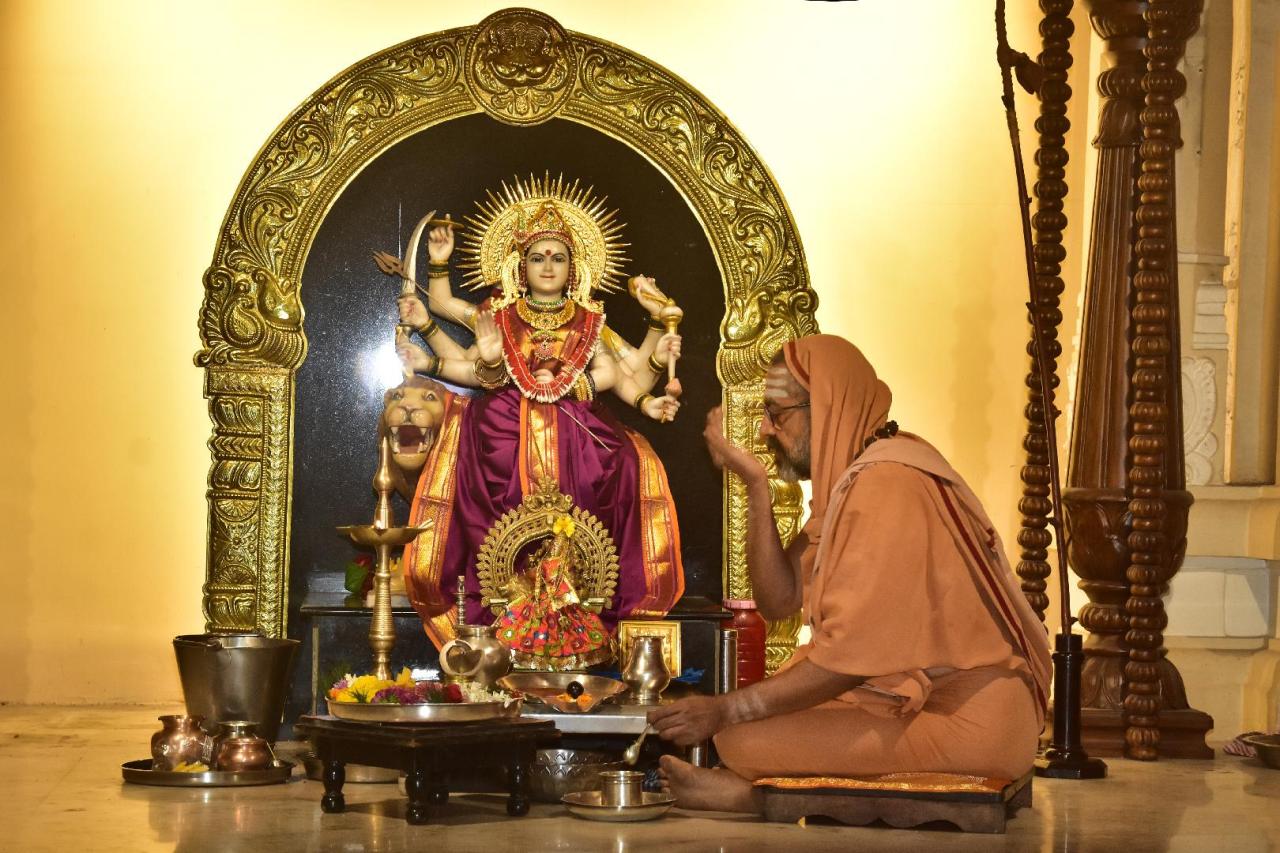
Prāṇa, Apāna, Vyāna, Udāna, Samāna Mudrā-s - representing the life-force within each being; these mudrā-s are employed while offering naivedya.
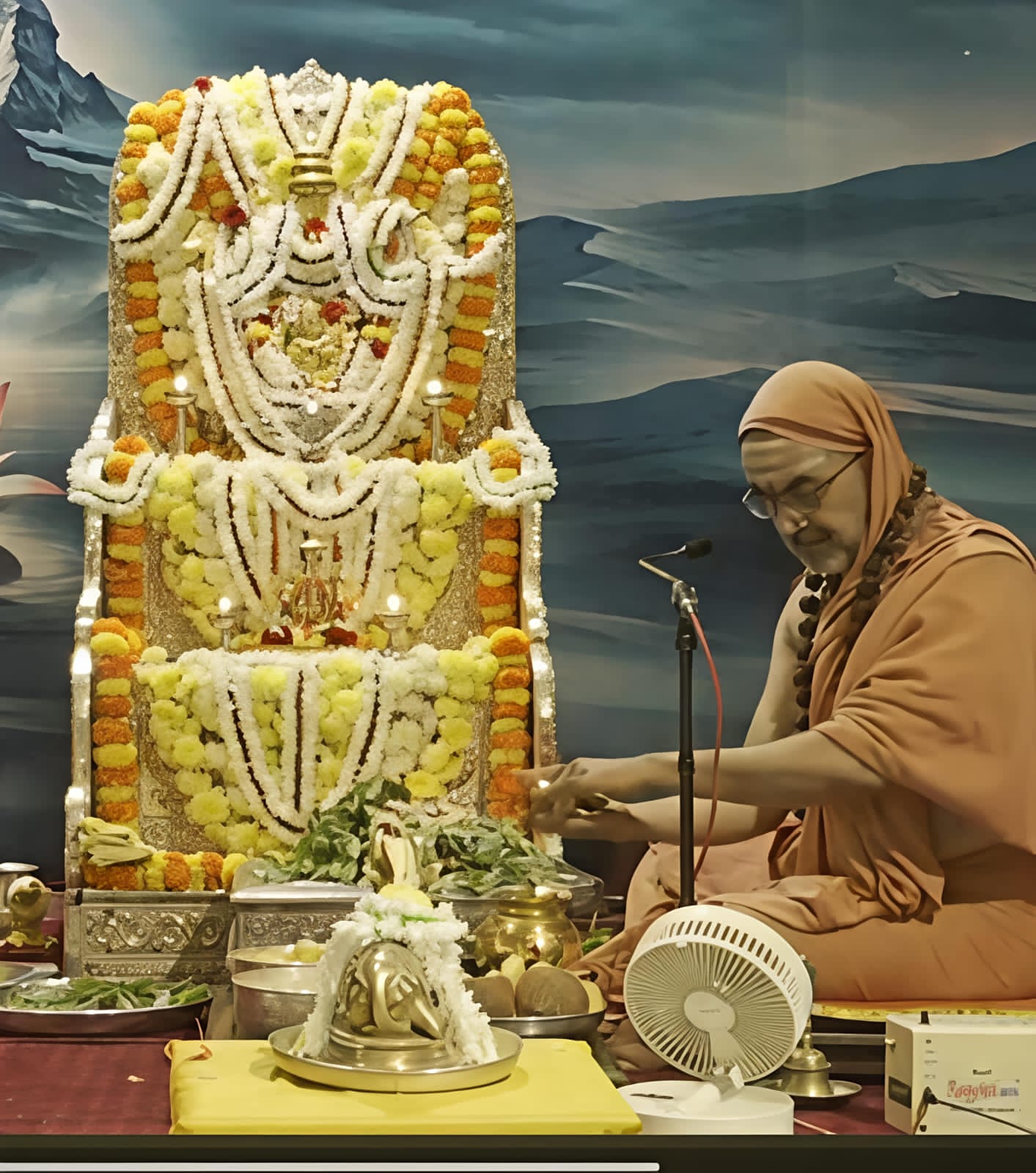
Añjali Mudrā - palms joined at the sides, open Namaskāra, for offering flowers during Mantra Pus͟hpāñjali.
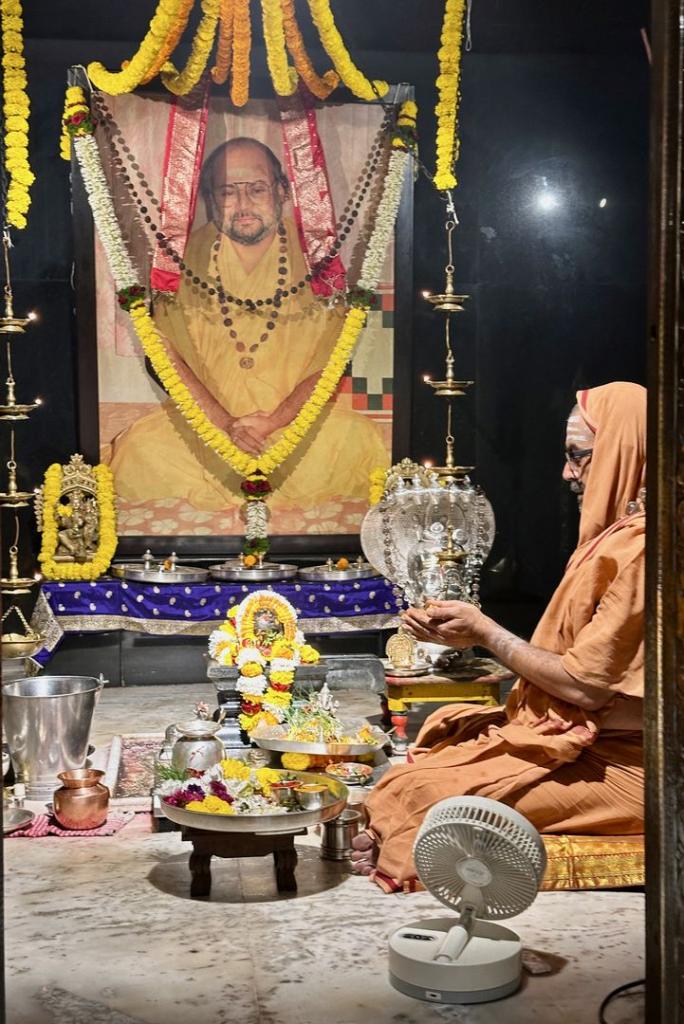
Abhivādana - At the end of the pūjā, salutations are offered with mantra-s and outstretched hands, honouring both the Deva and the hands - Kara, which helps us to accomplish our Karma.
 H.H. Swāmījī offering Naivedya
during Pūjā with Dhenu Mudrā
 H.H. Swāmījī offering Mantra Pus͟hpāñjali
during Pūjā with Añjali Mudrā
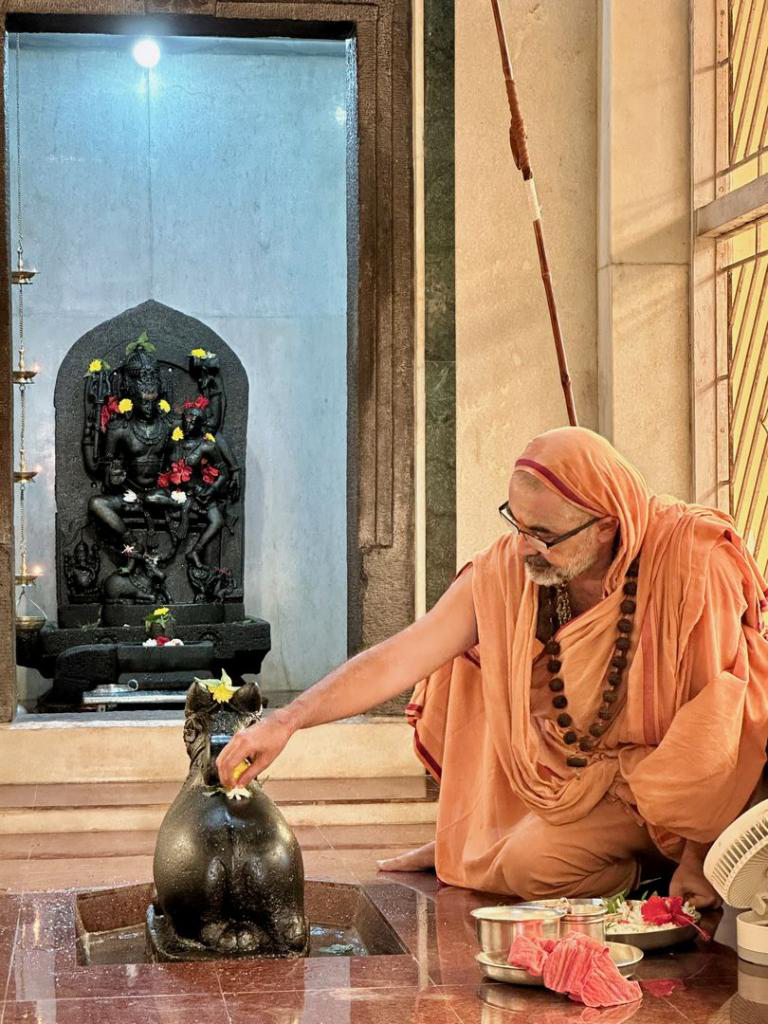 H.H. Swāmījī offering Pūjā and flowers to Nandī
with Mṛga Mudrā (at
Srī Umāmaheshwara Temple, Gokarṇa)
Mudrās of the Deva-s and Devī-s
Jñāna Mudrā or Chin-Mudrā: formed by joining the tips of thumb and index finger in a ring while keeping other fingers extended; represents the cycle of life and death, everyone and everything is essentially ONE, as demonstrated by Shrī Daks͟hiṇāmūrti and Mātā Shāradā.
Abhaya Mudrā: The raised palm facing outward, this mudrā grants protection to devotees. Shrī Daks͟hiṇāmūrti, Shiva's Naṭarāja form, Devī Bhuvaneshwarī and Deva-s displaying this mudrā inspire devotees to cultivate virtues of courage and fearlessness, especially on the path of dharma and sādhanā.
Varada Mudrā: This gesture, with the palm facing downward and fingers extended, represents the granting of boons and blessings to sādhaka-s as they surrender wholeheartedly to the Deva.
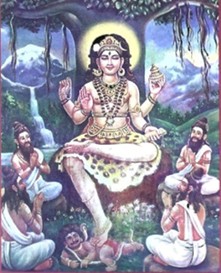
Chin-Mudrā displayed by
Shrī Daks͟hiṇāmūrti
The devotee's hands become instruments of devotion, transforming ordinary gestures into sacred offerings with body, mind and soul. Offering pūjā with the correct mudrā-s, properly pronounced and beautifully enunciated mantra-s strengthen the bond between the sādhaka and the Devatā invoking a cascade of joy. Shrī Kṛs͟hṇa assures us, "When one offers to Me with devotion a leaf, flower, fruit, water -- that I accept, offered as it is with devotion by the pure-minded.” So, the feeling behind the action is important, but it behoves us to improve ourselves in the quest for Knowledge and Benevolence, as mudrā-s transcend rituals into an expression of love for the Divine.